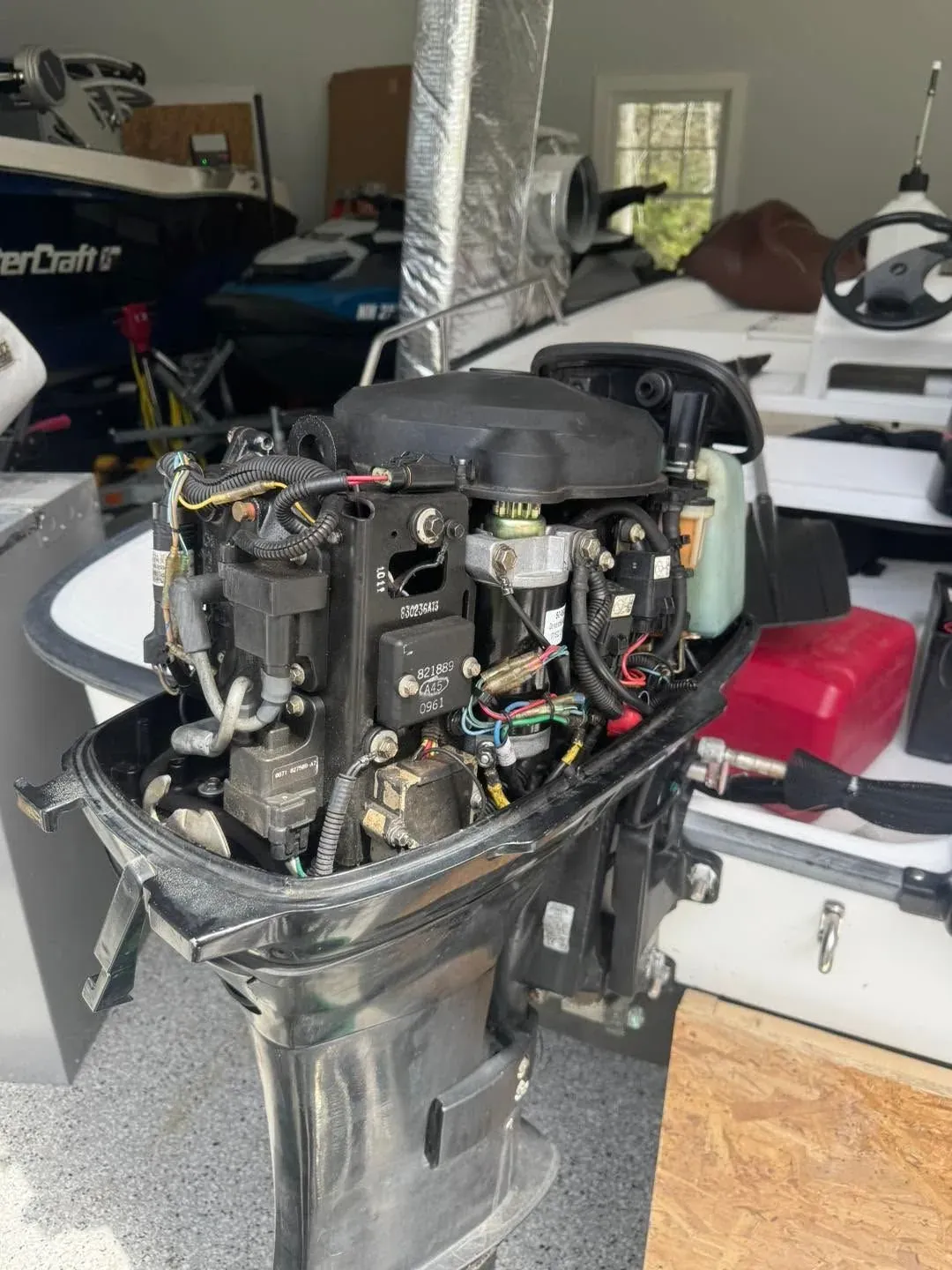
Work through these in order
-
1
Battery switch and kill lanyard
The two most common causes of a boat that is completely dead are the switch being off and the lanyard being out. Check both before anything else, every single time, including on a boat you are certain about.
-
2
Neutral and the safety interlock
Most engines will not crank out of neutral. Move the shifter firmly into neutral and try again — a linkage that is slightly out is enough to keep the interlock open.
-
3
Battery terminals
Loose, or green, or both. A terminal that looks connected can still be passing almost nothing. If they move by hand, that is your fault right there.
-
4
Listen to what it actually does
Nothing at all, a single click, a slow lazy crank, or a healthy crank that never fires — these are four different faults. Nothing and a click point at power or the starter circuit. A slow crank points at the battery. A good crank with no fire points at fuel or spark.
-
5
Fuel: tank, valve, bulb and vent
Is there fuel? Is the valve open? Squeeze the primer bulb till it's firm. Check the tank vent is open on a portable tank — a sealed vent will let an engine run for ten minutes and then stop it dead.
-
6
Stop cranking if it is flooded
Cranks fine, won't fire, and you can smell fuel? Stop. Keep cranking a flooded engine and you wash the bores, and that damage can cost far more than whatever the fault was to begin with.
Why this happens most in May
Boats on this lake sit for something like half the year. Batteries drain themselves, fuel goes off, impellers take a set, and connections quietly corrode in the damp. The first warm Saturday after ice-out is when all of that gets tested at once.
That is also why the checks above are worth doing rather than skipping. A large share of spring no-starts are a switch, a lanyard, a terminal or a vent, and finding one of those yourself is the difference between a Saturday on the water and a Saturday waiting.
What to tell us when you do call
Exactly what it does — nothing, a click, a slow crank or a good crank with no fire. Cold or hot. Where the boat is. What the engine is. And what was done to it last, including anything you tried from the list above. Those five answers decide what goes in the van, and again and again they turn a two-visit job into a one-visit job.