
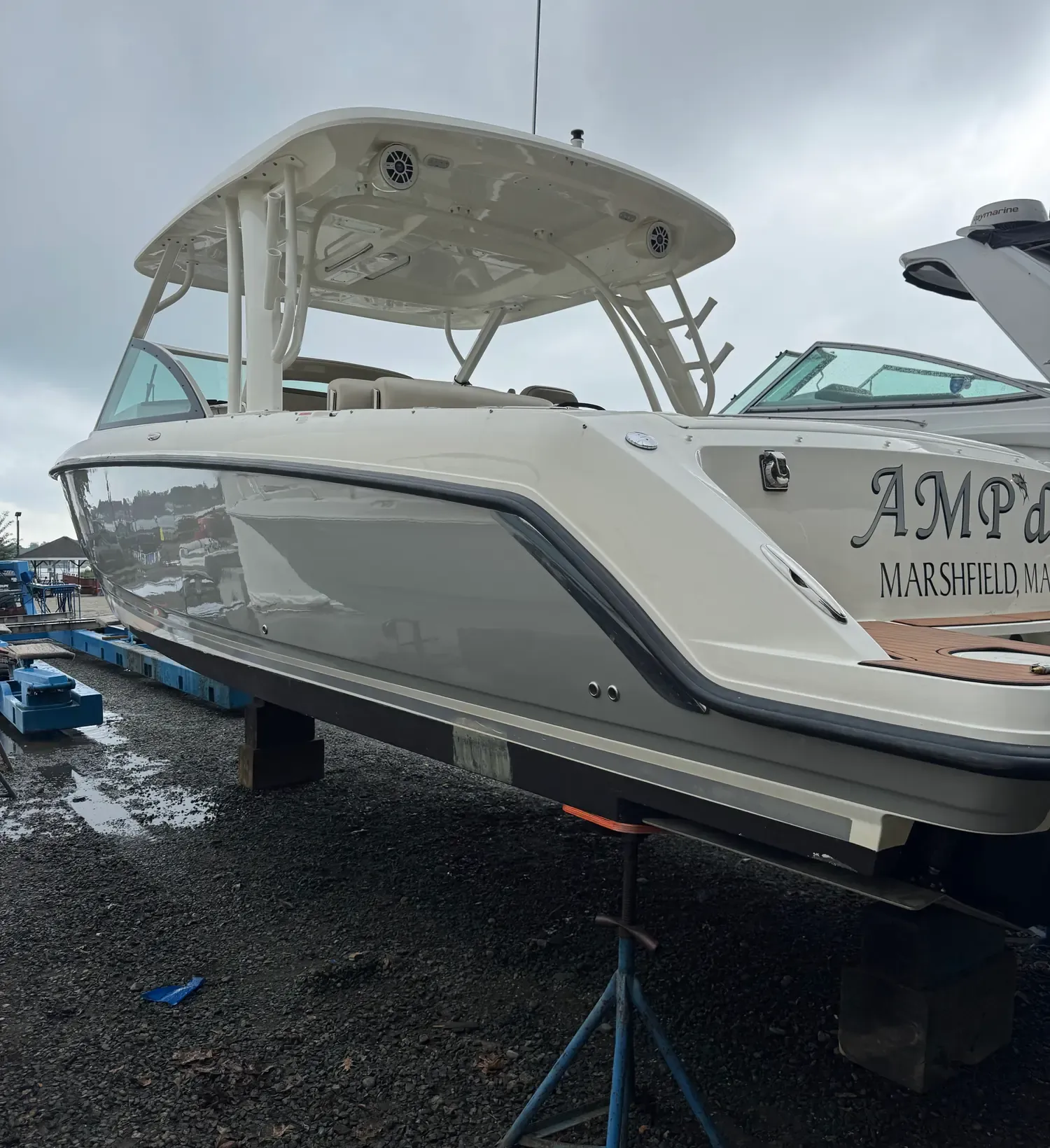
What shrink wrap does that a tarp does not
A tarp sits on the boat, not over it. The wind gets under it. Grommets rip out; tie-downs rub the gelcoat at every spot they touch, right down to the laminate; and snow piles up in the middle until the sag's holding a puddle. Come February, one corner's flapping loose, more often than not, and it's pouring meltwater straight into the cockpit it was meant to keep dry. Honestly, the inside ends up wetter than if you'd left her uncovered.
Shrink wrap goes over a frame and gets heat-shrunk until it's tight as a drum, so stuff slides off it instead of sitting there. Nothing flaps. The wind can't find an edge, and all the load goes into the frame, not the boat's own fittings. Blowing snow stays out. So do pine needles, sap and squirrels. The honest trade-off: it's single-season stuff. It gets cut off in spring and it doesn't go back on next year.
Ventilation is not optional
Seal a boat up and you've built a terrarium. Any damp that's still in there — bilge, carpet, a cushion, a locker — steams off on a mild day, condenses on the cold underside of the wrap when it freezes again, and drips right back down onto everything. All winter long. By spring you've got mildew in the upholstery, black spots on the headliner, and a smell foam just won't let go of. The boat's worse in April than it was in October.
That's exactly why vents go into the wrap, placed to move air down the length of the boat, not just let some in at one end. A zip-in access door is worth having too, so you can check on the boat mid-winter without cutting the wrap open and taping it back. A wrap with no ventilation does more damage over six months than no wrap at all. It's the thing we see done badly most often.
The frame, the peak and snow load
The frame exists because of snow. And wet New Hampshire snow weighs a ton. Put it on a flat, shallow wrap and the wrap hangs onto it, then hangs onto the meltwater, which freezes into a solid slab the next time it turns cold. Thaw, freeze, repeat, all winter, and every round piles on weight that wrap was never built to hold. Give the frame a proper ridge and some real height at the peak and the snow slides off before it can build. Keep it low and you've made a bowl.
The frame itself? Strapping, run fore and aft over padded uprights, with the ridge high enough to give a real pitch down both sides. Wherever the frame meets the boat, it gets padding — leave a bare strap end under a loaded wrap all winter and it'll mark or crack the gelcoat. The transom and the bow both need support too. The wrap gets tensioned over each end, and if it's unsupported it pulls down hard on the rails, the windshield and the bow rail.
Wrap, canvas cover or indoor storage
Indoor storage is the best outcome for the boat. No snow load, no UV, a steady temperature, and you can get to it whenever you like. A fitted canvas or poly cover on a good frame is reusable, and it's fine for a boat under a roof or in a truly sheltered spot. Canvas soaks up water, though, and sags under wet snow, so it needs checking and clearing through the winter. You can't just leave it alone till spring.
Shrink wrap's the middle option, and it's why most boats stored outdoors around here wear it: it handles the winter unattended, and it comes off in one pass in spring. What it can't do is save a boat that got put away wet. Prep matters more than the covering. A well-prepared boat under canvas comes out better than a damp one under a perfect wrap. We prepare boats for shrink-wrap or covered storage; call us at (603) 941-5836 and we'll confirm exactly what's included and how the wrap itself is handled.
Preparing the inside before it is sealed
Anything that's going to be shut in for half a year should be dry before it's closed up. Cushions come out, or at least get stood on edge so air can move behind them. Carpets and the bilge get dried out, not just wiped. Lockers stay open. Food, drinks and damp gear come off the boat completely. The fuel system gets dealt with before the wrap goes on, and don't seal a boat that smells of fuel: vapor that vents harmlessly all summer gets trapped under a wrap.
The drain plugs come out and stay out, so meltwater, and any rain that finds a way in, drains away instead of sitting in the bilge and freezing solid. We put them somewhere they'll actually turn up in spring, not loose in the boat. Batteries come out, get charged, and get stored where they won't freeze. This boring part is what decides the shape the boat's in when the wrap comes off in April.