
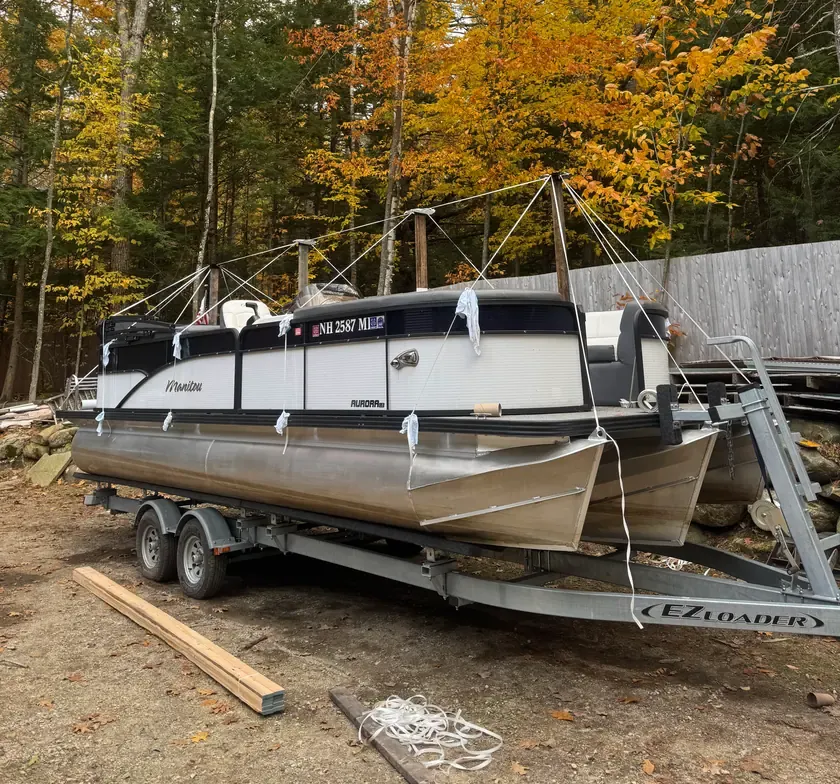
What winterization actually does
Every water passage gets drained, or filled with the right antifreeze. The fuel is stabilized and the system run so the stabilizer reaches the carburetors or injectors rather than sitting in the tank. The engine is fogged so the internals are not bare metal in damp air for six months. Gear lube is changed, which is also the moment a failing seal shows itself. Batteries come out or go on a maintainer. Then the boat is covered.
Timing it on Lake Winnipesaukee
The season on this lake is bracketed by ice. Ice-out is declared when the MS Mount Washington can reach all five of its ports, and the modern average has moved earlier across the record, with 2026 declared on April 13. Autumn's the other bracket. The winterization queue fills from late September. Book early and you pick your date; book late and you take what's left.
Shrink wrap and covers
A cover keeps snow load and water off everything the winterization just protected. Tell us what your boat's stored under, and where. A boat inside a barn and one sitting under the pines are two different jobs.
The failures that layup actually causes
Freezing's the dramatic one, and it's real. Water left in a block, a manifold, a raw-water pump or a heat exchanger expands as it freezes and splits the casting around it. That's not a repair. It's a replacement, and you find out in May, when the engine runs for two minutes and quits.
The quiet failures add up to more damage. Fuel left unstabilized separates and breaks down over six months, and what's left behind blocks filters and gums up jets and injectors. Bare internal metal in damp air corrodes, which is the entire reason for fogging. A battery left discharged sulfates and never holds properly again.
Every one of those is prevented by the same afternoon's work in October, and every one of them is invisible until spring. That gap between when the damage is done and when it is discovered is exactly why winterization gets skipped — and exactly why it should not be.