
Ethanol, water and phase separation
Ethanol's hygroscopic. It pulls water right out of humid air. A vented tank breathes in and out with every swing in temperature, and a tank sitting half empty through a New Hampshire winter has a big pocket of damp air over the fuel, doing exactly that, day after day. Up to a point, the ethanol keeps that water suspended in the gasoline. Past that point it can't, and the fuel separates. That's your boat that ran fine in October and won't run in May.
Phase separation leaves two layers. A heavy water-and-ethanol layer settles on the bottom, right where the pickup is, and the gasoline on top has lost the ethanol that was carrying a good part of its octane. Neither layer will run an engine properly. You can rock the boat all day; it won't remix. Pouring fresh fuel on top won't either, and no additive undoes it. The bad fuel comes out, the tank gets cleaned, and then you refill.
Water-separating filters are not engine filters
A water-separating filter isn't the engine's own fuel filter, and you need both. The separator is the bigger spin-on canister mounted between the tank and the engine. It slows the fuel down, and water (it's denser) drops into a clear bowl at the bottom where you can see it and drain it off. The little filter on the engine is there for fine particles, to catch them before the injectors or the carburetor. It isn't meant to hold water.
Look at that bowl — really look, don't just change it because the calendar says so. Water in the bowl means water in the tank, and if you swap the element without asking how it got there, you'll be back doing the same job before long. Rust-colored grit points at a steel tank rusting from the inside. Black, sticky gunk is usually old fuel and varnish lifted off the tank walls. Short of opening the tank, the separator's the best window you've got.
Tanks, vents and lines
The classic fuel fault: runs perfectly for ten minutes, loses power and dies, restarts after it sits a while, then does it all again. That's a vent problem. Fuel goes out of the tank, so air has to get in behind it — and if the vent's blocked by a wasp nest, a spider, corrosion or a kinked hose, the tank pulls a vacuum and the pump just can't draw. Try this: crack the fill cap. Hiss? There's your answer.
Tanks fail in their own ways, and they're worth knowing. Aluminum ones corrode from the outside, wherever they're sitting on wet foam or in a damp bilge. Steel ones rust from inside. A cracked pickup tube sucks air and fools you into thinking the pump's starving. Old fuel line goes hard and starts letting fuel through, and hose made before the ethanol-resistant standards rots inside and sheds bits of liner into the filter. ABYC publishes the standards those hoses and installs are built to.
Carburetors and injection after a layup
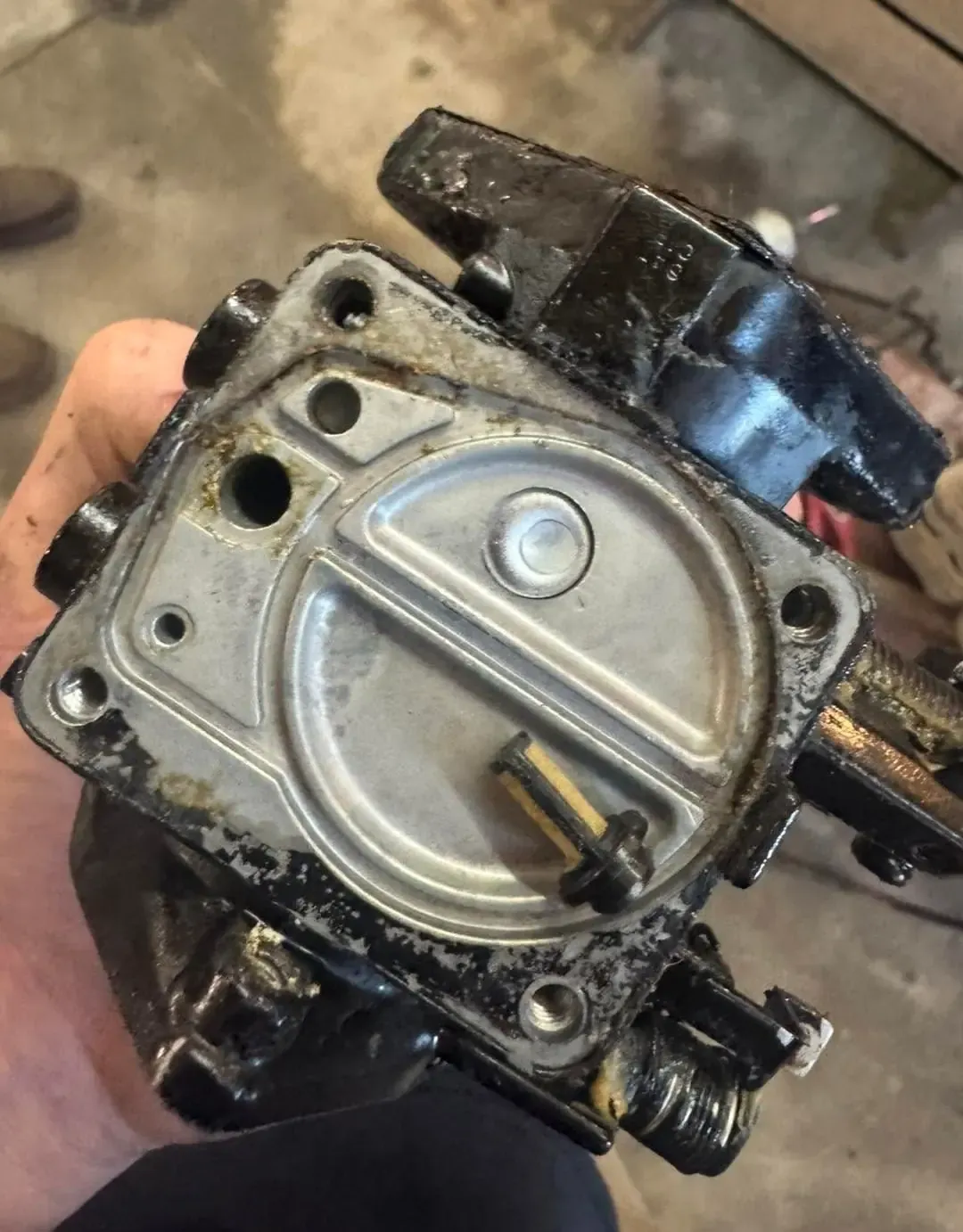
Storage is hardest on carburetors. Whatever fuel's left in the float bowl dries out, leaving varnish and a green-white crust, and the jets and passages it plugs are measured in thousandths of an inch. Symptoms: a lean stumble, a hesitation coming off idle, an idle that hunts up and down, or nothing at all. Cleaning means the carburetor comes off and comes apart. Spraying it from outside won't do it, because aerosol cleaner doesn't shift hardened varnish out of a pilot circuit.
Injected engines fail differently. Injectors clog partway, not completely, so the engine runs rough or down on power under load. High-pressure pumps in the fuel module quit, and water sitting in the system corrodes the rails and the injector tips. A vapor separator tank with fuel decomposed inside it needs cleaning out. And on either type, watch the priming bulb and lines: a bulb that's gone hard or cracked, or won't hold pressure, is a really common no-start.
The mistake owners make most easily
Asked which mistakes boat owners make, one of the two Mike named was poor-quality fuel. It's an easy one to make, because nothing happens at the pump. In it goes, the boat runs, and the damage waits until the boat's sat for a while. Weeks later, or a whole winter later, it turns up as a hard start, a rough idle or a filter full of water.
It's also the most preventable fault on this page. Fresh fuel from a busy pump. A tank kept full over the layup, so there's less air in there breathing moisture in. Stabilizer added before the last run of the season, and a water-separating filter changed on schedule. Do those and you've handled most of it.
Storing fuel properly over the winter
Stabilizer works, but only if it gets to the fuel it's supposed to protect. Pour it in the tank, shut the boat down for the winter, and the carburetor bowls, the lines, the filter and the injection system are still full of untreated fuel. The engine has to run long enough afterward to pull stabilized fuel all the way through. Most owners skip that step. It's the one that decides whether spring is easy or expensive.
A full tank has less air space over the fuel, so less humid air to give up water, and that's the main case for storing it full. If the boat's laid up dry, draining the carburetor bowls and the separator bowl is better still. Either way: a fresh water-separating element before the boat goes away for the winter, and a vent line you've checked is clear. Then the spring job's a start-up, not a tank clean-out.