
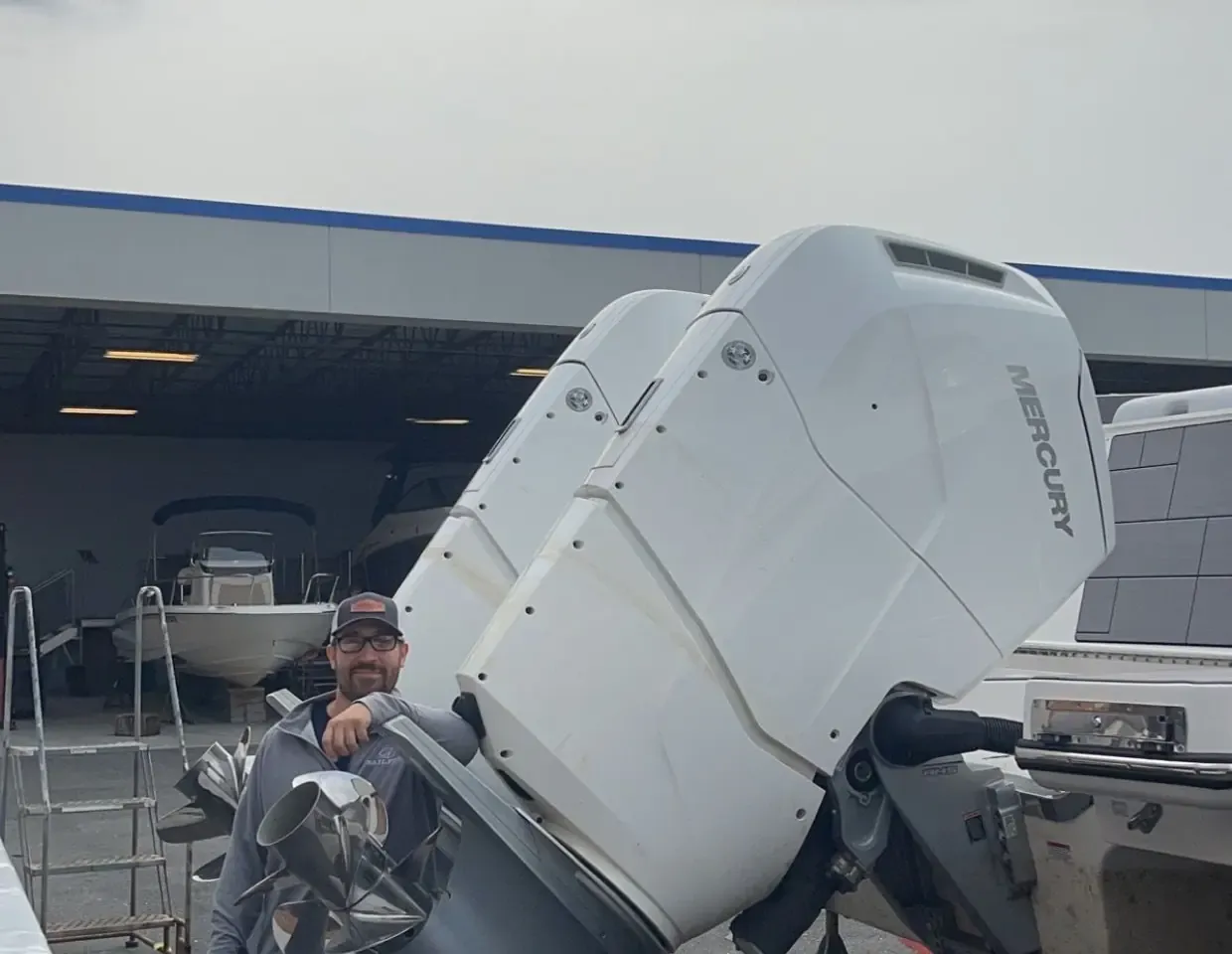
What is actually inside a lower unit
Under the anti-ventilation plate sits a gearcase. Inside: a vertical driveshaft, a pinion gear, forward and reverse gears, a clutch dog, the prop shaft, and a set of bearings and seals holding all of it in an oil bath. The whole thing runs submerged whenever the boat's in the water. Everything keeping the lake out is a seal or an O-ring, and every one of those wears. The oil in there isn't just lubricant. It's the evidence of what's going on inside.
On most outboards the engine's water pump lives down in the gearcase as well, which is why pump jobs and lower unit jobs tend to land on the same day (cooling has its own page). One plug sits low on the housing, one high. Under each screw there's a little gasket washer, and that washer's a leak path almost everybody forgets. Oil weeping at the drain screw? The gearcase is losing its protection a drop at a time.
Reading the gear lube
Gear lube that comes out milky, like coffee with cream, means water's in there. It emulsifies with the oil and kills its film strength. Then a New Hampshire winter comes, the water freezes, it expands inside the housing — and a case that only needed a reseal can crack. So milky oil in the autumn is an urgent job, not a spring one. Leave a gearcase full of that stuff to freeze in an unheated shed and you'll pay far more than a set of seals would've cost.
Metal in the oil says something else. A fine gray haze of particles stuck to the magnetic drain plug is normal wear. Bright flakes, chips, a plug wearing a beard of swarf? Gear or bearing material is coming off somewhere inside. Oil that's gone dark and thin and smells burnt has been run hot, or run low. Pull the drain plug and look hard at what comes out, once a season and after any hard strike. It's the least expensive diagnostic on the boat.
Seals, and why they fail
Seals fail from age, from heat, and from whatever wraps itself around the shaft. Usually it's the prop shaft seal. Fishing line wound tight behind the prop cuts right through the seal lip, then into the shaft itself, so pull the prop now and then instead of just eyeballing it from the side. The driveshaft seal up top and the shift shaft seal leak too, and both let water work its way down into the oil.
A pressure and vacuum test tells you whether the housing's sealed, before anything comes apart and again after the rebuild. Pressurize the case, hold it, watch it. Then check the vacuum side, because some seals hold one way and not the other. Skip that test and a gearcase goes back together with fresh oil and the exact same leak it came in with. A reseal that hasn't been pressure tested is a guess, not a repair.
Gears, bearings and shifting faults
Gears and bearings tell you what's wrong by the noise they make. A whine that changes with engine speed in gear and goes away in neutral? Look at the gearset. A rumble or growl whenever the shaft turns points at a bearing. Chipped gear teeth make a regular clack at shaft speed. None of it gets better on its own, and if you keep running a gearcase that's shedding metal, you grind that debris through every bearing left in the housing.
Shifting problems often aren't the gearcase at all. A clutch dog with rounded edges bangs into gear and jumps back out under load, and that really does mean opening the unit; the classic sign is a boat that pops out of reverse. Hard shifting, a stuck neutral, a lever that won't engage, though, are just as often cable adjustment, a seized shift linkage or a worn shift shaft bushing. Work out which before the unit comes off and you've saved the job.
What a reseal involves, and why it is shop work
A reseal means the lower unit comes off the boat. Shift linkage disconnected. Mounting bolts out, unit dropped clear, housing split. Then the insides: bearings and gears looked over, every seal and O-ring new, shims checked so the gears mesh right when it goes back together, and a pressure test before it goes back on with fresh oil. It's the shims that set the mesh. Get them wrong and a perfectly good gearset is done inside a season.
This is bench work. Not a dockside job. You need the boat held up, the unit lifted clear, a clean bench, a press. And Winnipesaukee's got granite ledge and boulders, with water that shoals fast around the islands — clip something with the skeg or the prop and the shock goes straight into the gearcase and its bearings. After a hard hit, the honest check is the oil, the shaft for runout, and a pressure test. Not just whether she made it home.